
Batteries, baked goods & burnout
Long read: A look into this year’s Community Energy England Summer Conference theme of Going Mainstream, alongside thoughts on the implications for wider adoption of community energy schemes.
By Project Developer Lizzie Stygall
Whilst the theme of this summer’s Community Energy England conference was Going Mainstream, the hot topics on the attendees lips were batteries, the phenomenal chocolate chip cookies provide by the venue, and why our community energy professionals and volunteers face burnout.
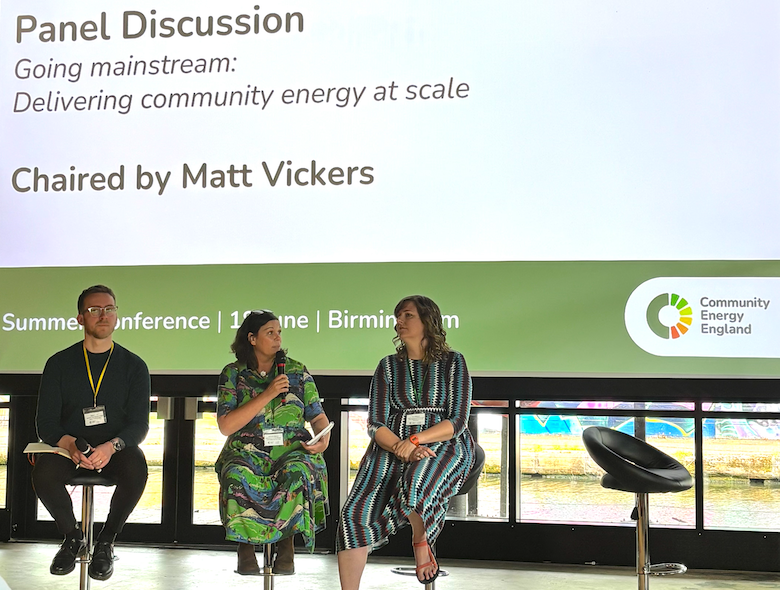
Fantastic panels throughout the day - including representatives of GB Energy and regional Net Zero Hubs - gave insight into how the community energy movement’s growth needs a serious boost to meet government Net Zero and community ownership targets.
Going Mainstream
Firstly, what a brilliant topic. Based on a 2023 report by Community Energy England, and amidst the constant uphill fight of community energy groups, CEE chose to highlight that most people (as few as 1% of the population) don’t have a good understanding of what ‘community energy’ actually is. It doesn’t help that there currently isn’t a legal definition, which was highlighted at March’s Department of Energy Security & Net Zero Community Energy Day as a major issue causing bureaucratic delays for community energy projects. Going Mainstream then was all about communication. How do we engage our communities, and help them see the benefits of local ownership of our power systems?
“Community Energy is about local people taking local action – to tackle climate change, energy security, and the cost of living in their local area by creating and owning community renewable energy installations. These benefit the recipients of the electricity, and the wider community benefits through the spending of excess income generated on local community projects (after re-paying their investor members).”
Community Energy Investors Club
The UK government is currently putting a lot of onus on communities to step up and Turbocharge the Transition to clean energy. In July, I’ll be on the panel at one of their regional Energising Britain events, which aims to share the brilliant work that can be done when communities gather their collaborative efforts, and work alongside social enterprises, charities and funders to bring local clean energy projects to fruition.
Having attended and spoken at a number of these events, I certainly see the value of sharing our work within the community energy sector: knowledge sharing is of huge value in developing sectors, and last week’s CEE conference was no different - I made multiple contacts who we’ll be consulting with on future funding options, early stage feasibility projects, and site visits to up-and-running technologies. But there’s concern here that we’re sharing that knowledge inside an echo chamber (I say this completely unironically as I type a blog which will be shared on our company website and via LinkedIn, to all of my peers in the sustainability sector… Food for thought).
I think what’s currently undervalued by government initiatives though is on-the-ground publicity and engagement within communities. This is where limited funding is stretched for communities and SME’s, who’s presence is often limited to local festivals, markets and occasional initiatives, often on top of busy work weeks, campaigning, constant funding applications and so, so many spreadsheets. It speaks volumes that the Community Energy England’s crowdfunder for a national campaign, Up The Energy, was pushed so hard at the event, with organisers hoping to raise thousands on the day from representatives of community energy groups, many of whom are part-time or volunteers. As an SME, we were pleased to be able to support the crowdfunder, as we truly believe in CEE’s mission and messaging, but it’s a true shame that this its not government funded.
We’re incredibly lucky in Sheffield to have a presence at the local Sheffield Energy Hub - though it’s currently between sites again due to its reliance on the council for a high street shopfront space - where we can hold events, meet with members of the public, and engage with our peers in sustainability. It’s a brilliant place for all things clean energy, retrofit and community ownership. If you haven’t already supported your local hub, please consider doing so!
As many of you will know, SY Ecofit is committed to community engagement, through monthly retrofit workshops around Sheffield, through the development of South Yorkshire Women in Sustainability, and through our presence at local community and national events. We’re currently gearing up for our own on-site Public Launch at dairy farm Our Cow Molly, where our new Community Benefit Society Sheffield Energy Works will celebrate our Community Share Offer opening to the public. We’ll engage with hundreds of visitors to the farm, ensuring visibility with the local residents and offering them the opportunity to buy in to locally produced energy, for a local family-owned business, powering local food production.
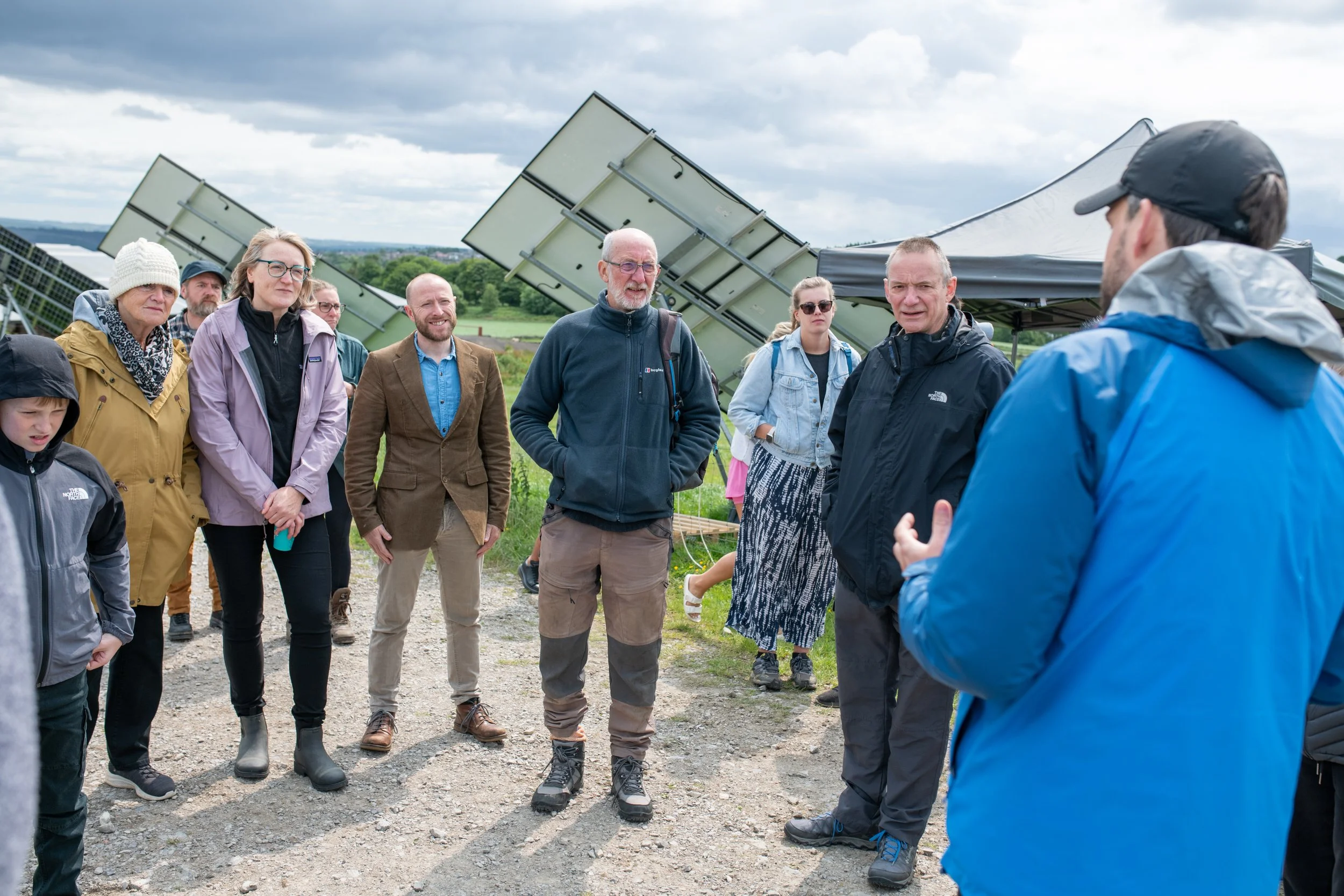
Jonathan speaks to members of the Sheffield community about the benefits of our decarbonisation work to the farm and local investors.
However, I will be taking forward some learning from the CEE conference - it’s imperative that we keep endeavouring to make knowledge sharing a priority - and not just amongst our peers, but with the public too. It’s something we at SY Ecofit consider core to our work in decarbonisation and building community wealth, and as a community interest company.
Batteries, batteries everywhere
The afternoon Open Spaces forum this year was dominated by talk of batteries. As domestic, community-owned and commercial clean energy generation has grown over the last decade, and with multiple fuel crises leaving grid prices increasingly susceptible to volatility, the role of batteries has grown. For many cases, this is simply about storing excess energy generated rather than receiving poor payback from the grid, but we’re also seeing an increasing interest in shared power, such as from community owned energy projects or through smart initiatives such as virtual power plants.
We’re really starting to see the Internet of Things coming into its own in terms of energy generation, usage reduction, and storage - including a growing number of electric cars facilitating storage as batteries for domestic properties. We’re currently exploring the potential for Virtual Power Plants, using community ownership to support a shared energy system which would alleviate costs for a local housing charity.
It’s going to be really interesting to see how the role of batteries continues to change the energy landscape, and we’re keen to be part of the transition to whole house systems, and those at street and community scale, enabling the generation and sharing of locally generated energy alleviating reliance on fossil fuels, increasing community wealth, and protecting those partaking from volatile fuel prices.
Burnout
One of those topics that immediately got a lot of serious nods around the room. As community energy is so reliant on volunteers (many of whom are retired or working alongside part-time jobs) and start-ups and SMEs, burnout is a very real threat. Most projects take several years to get off the ground, which can mean multiple funding rounds, changes in leadership, and mounting costs.
So how do we make sure our teams aren’t burning out? Working alongside professionals who know the field is so important. Pure Leapfrog have offered constant support on guiding us through the bureaucracy of establishing a Community Benefit Society, creating a Communtiy Share Offer, assisted in financial modelling, and helped with all the legalities, contract clauses and minutae of dealing with contractors and sub-contractors.
It also helps that one of our key funders, North East and Yorkshire Net Zero Hub, offer constant support through our projects, including reMooable Energy, decarbonising heritage with Wentworth Woodhouse, and DIY Retrofit.
SY Ecofit also takes our team health and wellbeing seriously. We partner up on events, take time off in lieu, and share the workload across all our teams, whether it’s the clean energy team supporting our retrofit team’s events, or our retrofit team helping with the publicity for our Community Share Offer Launch (did I mention that yet?). It’s why, in the run up to our busiest week of the year, I’ll be taking this afternoon off.
There’s talk from GB Energy about Local Power Plan funding being directed to support local hubs, knowledge sharing initiatives, and generally offering structured support for the growth of community energy groups, effectively protecting and bolstering their operations. There’s potential for this to relieve a lot of stress on individuals and organisations, and encourage growth in the sector, if delivered well, but will be very dependent on sufficient funding in subsequent years to sustain the changes made.
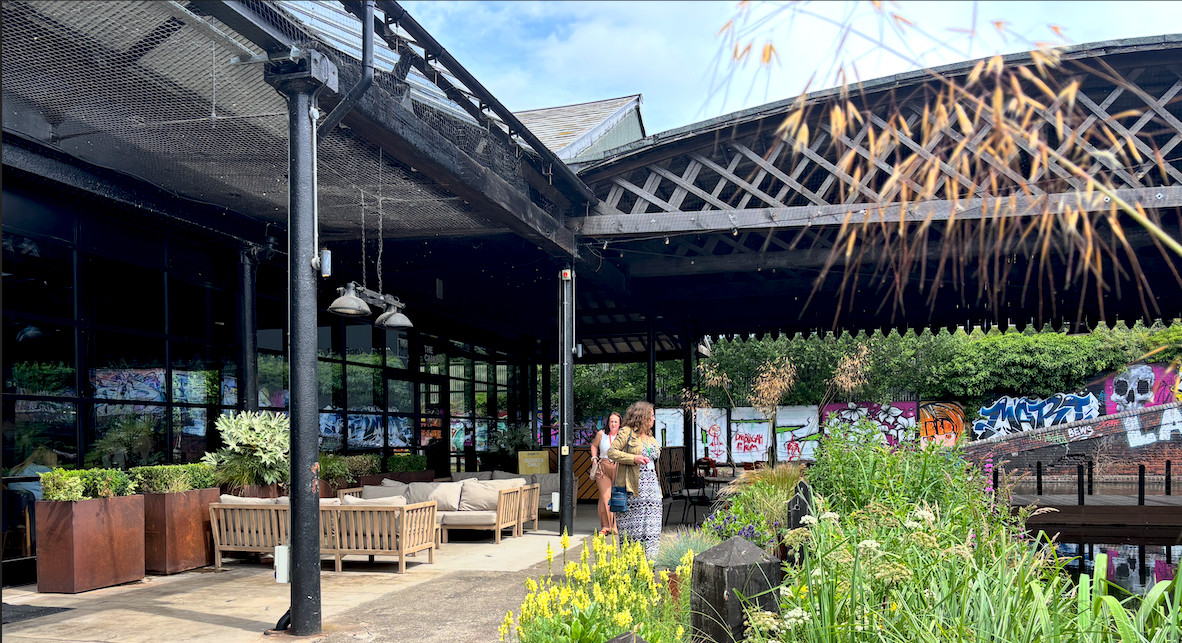
The brilliant venue, The Bond in Birmingham, had some fantastic wetland planting, which was buzzing with life throughout the day.
Last but not least…
You might be wondering about those cookies? They were excellent: freshly baked, big chunky chocolate chips, and I was delighted to see that the vegan options for our plant-based peers looked equally exceptional. But why are cookies important? They were just one small part of a beautifully executed event. The Community Energy England team are clearly delighted to be working together, and that joy and their passion really shone through. A stunning refurbished industrial venue in Birmingham, right on the canal, with some lovely wetland planting, endless coffee and chilled water (with reusable aluminium bottles to hand), and cool spaces… all of this was complemented by lovely organisation. A HUGE screen meant all the slides were accessible, there was clear communication about timings, some energising exercises by new CEO Matt Vickers, and the afternoon Open Spaces forum is a brilliant concept that never fails to get conversations flowing.
So why am I remarking on this? Great organisation should be recognised, especially with a small team operating on limited funding. It sets the scene for brilliant conversation, makes everyone feel welcome, ensures this is an event we want to keep coming back for. We’ve certainly found the attendance at events where we offer food is always higher, and means we can highlight the work of local initiatives like Food Works.