

Retrofitting Dave and Kathy’s terraced home in Crookes
Dave and Kathy are refurbishing their mid-terrace home and using it as an opportunity to make their home more comfortable and decarbonise their environmental footprint. They love their home: they have lived there for 30 years and have no plans to leave.
Like other houses built between 1900 and 1929 it is a stone front brick house with solid walls. They had previously added some insulation and ventilation and double-glazed the windows, but the back of their house is particularly cold in winter, their attic room is too hot in summer and too cold in winter, they have a draughty front door and living room and issues with condensation.
SY Ecofit’s whole house assessment recommended room-in-roof insulation plus front and rear internal wall insulation. Because the house doesn’t have cavity walls, we have to be sensitive about retaining wall breathability when recommending insulation type. We also recommended new windows and insulated doors. Although their existing windows were double-glazed the window frames were worn and cracked. Their house was a leaky envelope - but can be fixed - and importantly when fixing heat ‘leaks’ it is still key to ventilate the house.
We recommended they complete fabric improvements to the house before installing their much-desired heat pump. Making fabric changes first means they will need a smaller heat pump.
Our recommended improvements will see a significant improvement in the house’s EPC rating but most importantly for Dave and Kathy they will reduce their carbon emissions significantly, their home will be warmer all year round and they will be able to use their attic in comfort!
Estimated costs of retrofit measures:
£35K +VAT
Grant eligibility:
Government’s Boiler Upgrade Scheme
Typically these retrofitting measures for this property type save 3 tonnes of carbon p.a.
Our Cow Molly’s
energy transition with reMooable Energy
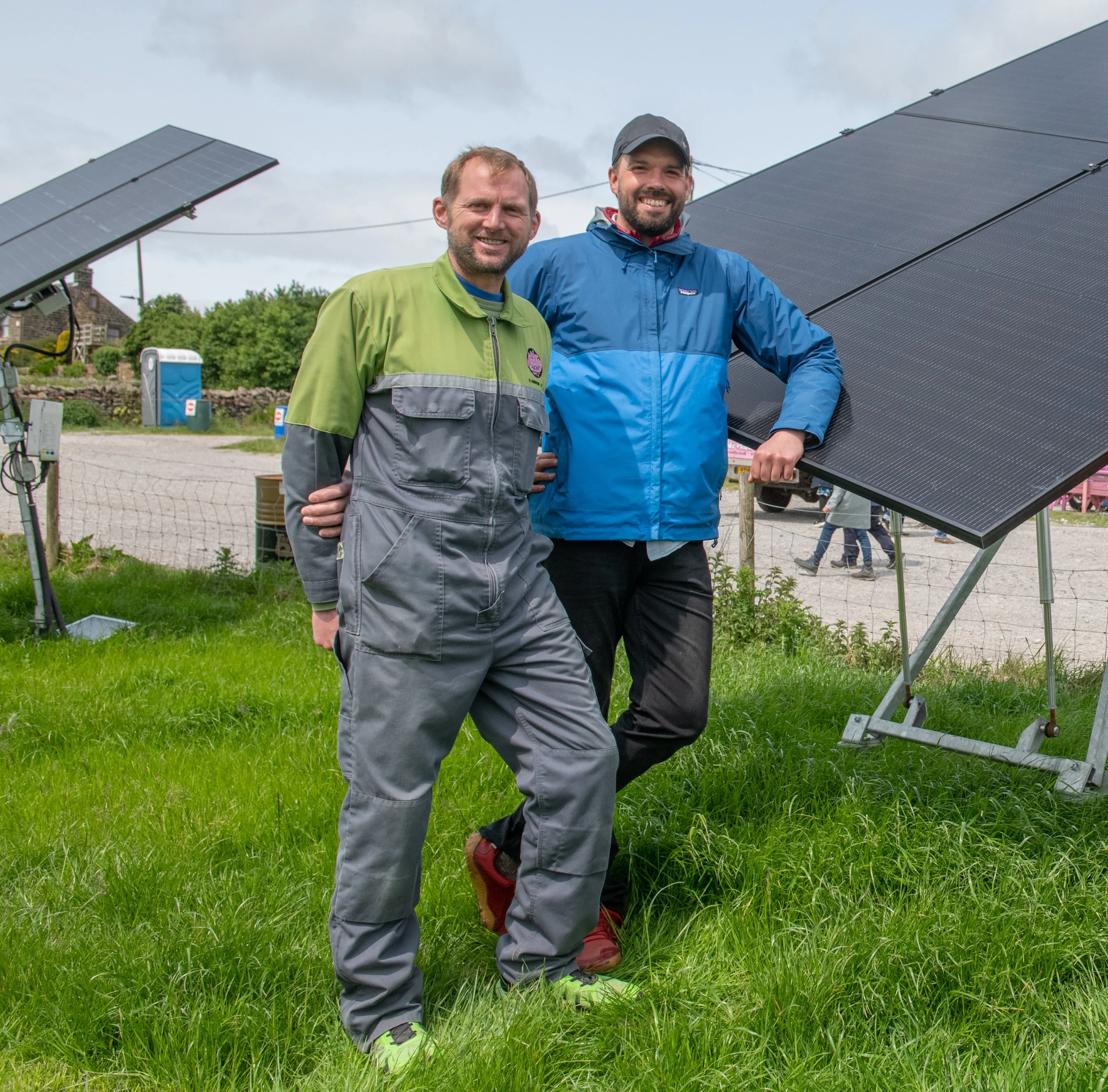
The reMooable Energy project, led by SY Ecofit, aims to transition family -run South Yorkshire dairy farm from a consumer of fossil fuels into a producer of clean energy, by integrating sustainable energy provisions into its dairy farming operations. Having completed the feasibility stage, we’re now preparing to install clean energy assets on the farm.
The site. Cliffe House Farm, better known as Our Cow Molly, is in Dungworth, four miles from Sheffield city centre. The project will transform the farm into a community-owned energy project, which will power the dairy farm.
The energy. A newly-constructed barn with 2,713 sq m of roof space will be covered with solar panels and house an anaerobic digester – converting cow muck into heat and electricity, thereby capturing fugitive methane. We’ll be utilising the by-products of this process too – hot water will be piped to the dairy for pasteurisation and sterilisation, and digestate (the material produced by the process) will be used as fertiliser on site.
Sheffield Energy Works, a new Community Benefit Society, has been created to raise the capital to buy the clean energy assets. By investing in Sheffield Energy Works, residents of the region will be supporting Yorkshire’s largest community-owned clean energy scheme, and will become the energy company owning the assets – with up to 4% rate of return.
"This is about more than just clean energy - it's about building community wealth," explains Jonathan Hind from SY Ecofit. The project plans to raise £5 million through a combination of community share offers, grants, and green finance.
SHEFFIELD ENERGY WORKS is a Registered Society on Companies House RS009655
Click here to express your interest in the scheme,
and to be the first to hear when we launch our first
Community Share Offer later this year!

Transforming homes for ASSIST Sheffield
South Yorkshire charity ASSIST Sheffield works with refugees and those seeking sanctuary. At the end of 2023 they received funding from the government’s Social Housing Decarbonisation Fund for the potential retrofitting of five houses which meant they were eligible to commission works from a PAS35-accredited contractor. After our cost-benefit analysis we proceeded with four properties.
ASSIST commissioned us as its delivery partner and as a new organisation, this was our first commission.
ASSIST wanted to collaborate with a skilled provider who could provide a local pipeline and became our first retrofit customer - a great example of local organisation collaboration. They gave us a budget and the brief to elevate the properties to EPC C level standards.
Their varying states of disrepair posed tricky: the properties needed different improvements - some requiring extensive renovations as well as retrofitting. This meant that the works could not be completed via a one-size fits-all approach often favoured in large-scale projects by larger contractors.
One of the benefits of the SHDF-enabled consortium is that it reduces the administrative burden on housing organisations in commissioning contractors. ASSIST were pleased to find that commissioning us wasn’t onerous. They coordinated the funders whilst we coordinated the teams of mostly-local contractors to work across the portfolio of buildings for 12 months.
Our timeline of works was impressive - properties were completed a year after the first conversation started. This was due to impressive teamworking, use of local contractors and flexibility from our teams. Retrofitting multiple properties meant that we could offer local contractors sustained work and that they were on-hand to support the different projects.